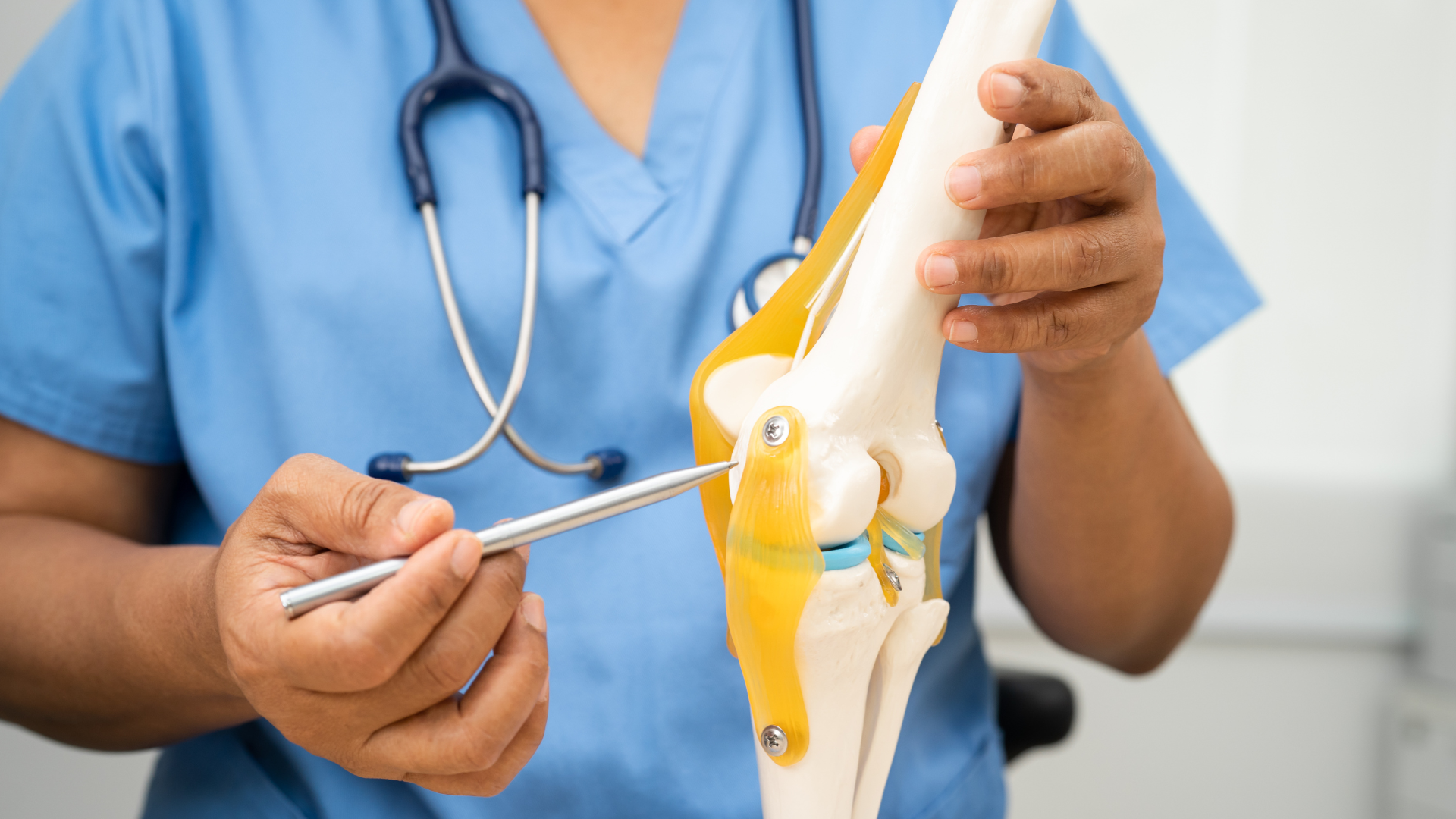
Accurate ICD-10-PCS revision total knee arthroplasty coding is critical for compliance, reimbursement, and audit defense. However, revision knee cases, especially partial component exchanges, remain one of the most misunderstood and highly scrutinized areas in inpatient coding. Coders often struggle to determine whether a procedure should be reported using the
Revision root operation or coded as a combination of Removal and Replacement.
This blog walks through a real-world clinical scenario involving a revision of a
tibial component only. Using official
ICD-10-PCS guidelines and best practices, we explain correct diagnosis selection, procedure coding, sequencing, and DRG impact. By the end, you will have a clear, practical framework to confidently code with similar encounters while reducing compliance risk.
1. Understanding the Clinical Scenario
A 79-year-old male is admitted for worsening pain and instability of a right total knee replacement that was originally performed six years ago. Imaging confirms mechanical loosening of the tibial component without evidence of infection.
During surgery:
- The orthopedic surgeon removes the failed tibial baseplate and polyethylene insert.
- The surgeon replaces them with a new modular tibial baseplate and insert.
- The femoral and patellar components remain intact.
- The operative note clearly documents: This is a tibial component-only revision A synthetic substitute was implanted.
- The postoperative course is uncomplicated Discharge occurs on postoperative day three.
2. Principal Diagnosis Selection
Mechanical Loosening as the Reason for Admission
The correct principal diagnosis is:
- T84.032A – Mechanical loosening of internal right knee prosthetic joint, initial encounter
- Mechanical loosening prompted the admission and surgical intervention, meeting UHDDS requirements for principal diagnosis assignment.
3. Why the 7th Character “A” Matters
- The seventh character “A” (initial encounter) is appropriate because this admission represents active treatment of the complication. Even though the original knee replacement occurred years ago, this is the first encounter for treatment of the loosening.
4. ICD-10-PCS Procedure Coding Explained
Why This Is Not a “Revision” Root Operation
Although the surgeon uses the term “revision” in the operative note, ICD-10-PCS coding is based on what was done, not the procedure name. According to ICD-10-PCS guidelines, the Revision root operation is reserved for procedures that correct or adjust a device without removing it, such as repositioning or tightening.
In this case, the failed tibial component was completely removed and replaced.
Therefore, the correct approach is to code:
5. Correct ICD-10-PCS Procedure Codes
Removal of Failed Tibial Component
- 0SPC0JZ – Removal of synthetic substitute from right knee joint, open approach
- This code represents the complete removal of the failed tibial baseplate and insert. The device value “synthetic substitute” is supported by the operative note.
Replacement of New Tibial Component
- 0SRC0J9 – Replacement of synthetic substitute in right knee joint, tibial surface, cemented, open approach
- This code captures the insertion of the new modular tibial baseplate and polyethylene insert. The qualifier specifying the tibial surface is essential because only one component of the knee joint was replaced.
Together, these two codes fully and accurately describe the procedure performed.
6. Why Other Coding Options Are Incorrect
- Coding Only Replacement: Fails to capture device removal and does not reflect the full scope of the procedure.
- Coding Only Removal: Under codes the encounter and may misassign DRG.
- Coding Osteoarthritis as Principal Diagnosis: Coding it as the principal diagnosis misrepresents medical necessity and creates compliance risk.
7. DRG Assignment and Reimbursement Impact
Correct DRG Grouping- When coded correctly, this encounter groups to:
- MS-DRG 470 – Major joint replacement or reattachment of lower extremity without major complication or comorbidity
- Because the patient has no documented major complication or comorbidity and no infection, this is the appropriate DRG.
8. Why Accuracy Matters
Misclassifying a partial revision as a full joint replacement or failing to code device removal can trigger payer audits, recoupments, and compliance exposure. Revision arthroplasty cases are consistently high-risk for denials.
9. Compliance and Audit Takeaways
To support compliant ICD-10-PCS revision total knee arthroplasty coding, coders and auditors should always:
- Review the operative report in detail, not just the procedure title.
- Confirm which components were removed and replaced.
- Verify device type, fixation method (cemented versus uncemented), and material.
- Avoid using the Revision root operation unless the device was adjusted without removal.
- Query the provider if documentation is unclear or contradictory.
Additionally, documentation must clearly support medical necessities, such as mechanical loosening, instability, or device failure. If infection is present, coding and DRG assignment change significantly and may introduce a major complication or comorbidity.
10. Best Practices for Reducing Denials
- To reduce audit risk and denials in revision knee cases:
- Educate providers on documenting component specificity.
- Train coding staff on ICD-10-PCS root operation hierarchy.
- Use internal audits to identify trends in under-coding or over-coding.
- Align coding practices with official ICD-10-PCS guidelines and Coding Clinic advice.
For further guidance, refer to official resources from the Centers for Medicare & Medicaid Services and the American Hospital Association.
Conclusion
Accurate ICD-10-PCS coding for revision knee arthroplasty requires careful document review, strong understanding of root operations, and adherence to official guidelines. Coding partial knee revisions correctly helps protect reimbursement and reduces compliance and audit risk.
Need help reviewing complex orthopedic cases or training your coding team?
Contact us today and learn how to code ICD-10-PCS revision total knee arthroplasty correctly, avoid denials, and ensure compliance with this step-by-step guide.