×
![]()

In the fast-paced world of trauma care, every second counts. Behind the scenes, trauma registry data management plays a major role in transforming raw patient data into actionable insights that save lives. Trauma registries collect detailed data on injured patients, from the moment of injury through treatment and discharge. However, the true power of these registries lies not just in data collection but in how that data is managed, validated, and utilized.
Poor data management can lead to incomplete records, inaccurate benchmarking, and missed opportunities for quality improvement. Conversely, strong practices enhance performance improvement initiatives, support research, and help trauma centers maintain verification from bodies like the American College of Surgeons (ACS). This article explores the critical importance of trauma registry data management, its challenges, best practices, and future directions.
We will discuss the key factors that demonstrate why effective trauma registry data management is vital for improving patient outcomes, ensuring compliance, and advancing trauma care, while exploring best practices and strategies to help you optimize your registry today.
A trauma registry is a specialized database that captures comprehensive information about trauma patients, including demographics, injury mechanisms, pre-hospital care, diagnoses, treatments, outcomes, and complications. These registries feed into larger systems like the National Trauma Data Bank (NTDB) and the Trauma Quality Improvement Program (TQIP).
Accurate data drives evidence-based changes in clinical protocols, reduces mortality, and identifies injury prevention opportunities. For instance, registries have contributed to significant declines in trauma-related death and disability rates by enabling systems-level improvements.
Without proper management, registries risk becoming repositories of unreliable information, undermining their potential to inform policy, research, and care delivery.
High-quality trauma registry data management directly correlates with better patient care. Trauma teams rely on registry data to track outcomes, spot trends, and implement performance improvement (PI) projects. When data is accurate, clinicians can identify gaps early—such as delays in care or higher-than-expected complication rates, and adjust accordingly.
Consider a hospital analyzing ventilator-associated pneumonia rates. Reliable data allows for precise risk adjustment using injury severity scores and comorbidities. This leads to targeted interventions that lower infection rates and shorten hospital stays. Studies show that well-managed registries support benchmarking against national standards, fostering competition and continuous improvement across trauma centers.
Despite its importance, trauma registry data management faces several hurdles:
These challenges can result in delayed reporting, failed verifications, or flawed research, emphasizing the need for strategic data management.
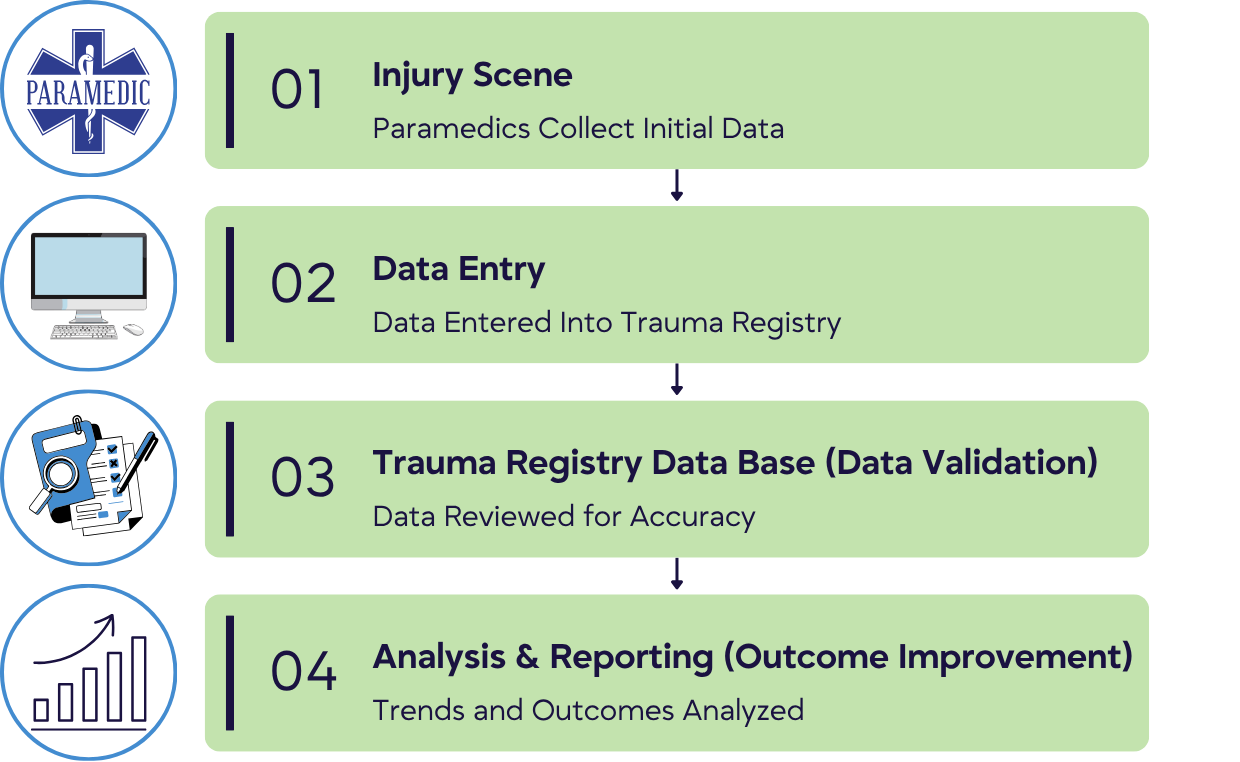 The Trauma Registry Data Lifecycle
Successful programs adopt a proactive, multifaceted approach to data management.
By following these practices, centers can turn data management from a compliance burden into a strategic asset.
Beyond immediate clinical use, trauma registry data management drives research and prevention. Clean, detailed datasets enable studies on injury patterns, treatment efficacy, and long-term outcomes. Researchers can explore topics like the impact of pre-hospital interventions or disparities in rural versus urban care.
Public health agencies use aggregated data to identify high-risk areas or behaviors, such as distracted driving or falls among the elderly. This informs targeted campaigns that reduce injury incidence. Strong data management ensures these analyses are credible and generalizable.
Effective trauma registry data management is not optional; it is foundational to high-quality trauma care. It empowers providers to deliver better outcomes, supports regulatory compliance, advances research, and contributes to safer communities. Hospitals and systems that invest in people, processes, and technology reap significant rewards in terms of patient survival, operational efficiency, and institutional reputation.
As trauma care continues to advance, those committed to high quality in data management will lead the way. Trauma program leaders should assess their current practices, invest in training and tools, and develop a data-driven culture. The lives saved through these efforts make the investment invaluable.
Contact us to learn more about how Velarity HCS can help with every aspect of data management, from staffing to gap analysis.
Source: (1) Resources for Optimal Care of the Injured Patient 2022 Standards, 6.1 Data Quality Plan