×
![]()


The New Measure of Success
The conversation in CDI is changing.
For years, CDI programs measured success through familiar metrics such as query volume, CC/MCC capture, Case Mix Index (CMI), and financial impact. While these metrics remain important, they no longer fully capture the value CDI delivers to healthcare organizations operating in an environment increasingly shaped by quality reporting, risk adjustment, value-based reimbursement, and regulatory oversight. CMS value-based programs explicitly tie reimbursement to quality, outcomes, patient safety, and efficiency rather than volume alone. [dexur.com], [hhs.gov]
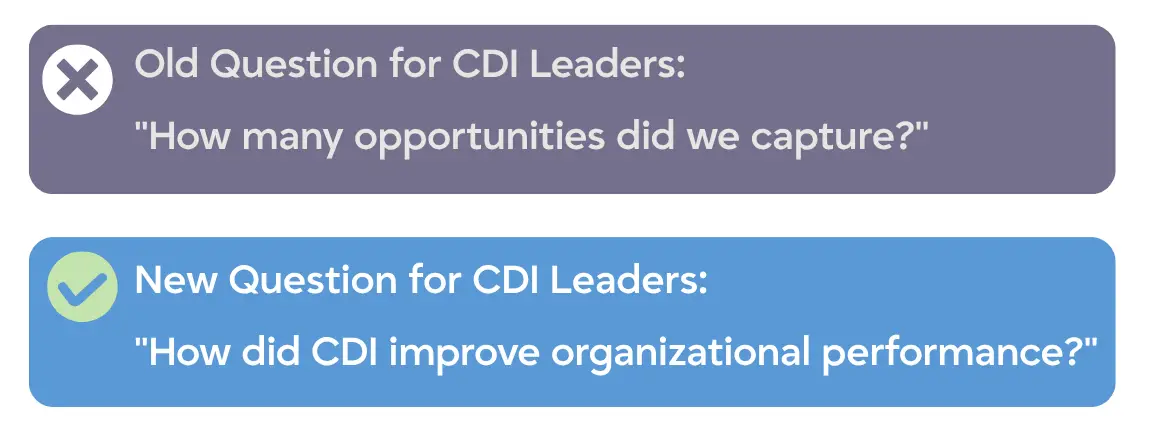
As reimbursement continues to shift toward quality and value-based care models, CDI has evolved from a documentation-focused function to a strategic enterprise partner influencing quality scores, compliance risk, physician engagement, risk adjustment, and financial sustainability. [dexur.com], [hcahpsonline.org]
From Documentation Improvement to Performance Improvement
The modern CDI leader’s role extends far beyond chart reviews and query management.
Understanding Hospital Star Ratings, risk-adjusted mortality, readmissions, Hospital-Acquired Conditions (HACs), PSI-90 measures, and Value-Based Purchasing allows CDI professionals to influence outcomes that matter to patients, providers, executives, and regulators. CMS Hospital Value-Based Purchasing measures include mortality, complications, healthcare-associated infections, patient safety, patient experience, and efficiency. All of these areas are heavily influenced by the accuracy of clinical documentation. [hhs.gov], [hcahpsonline.org]
Documentation serves as the foundation for coded data, quality reporting, risk adjustment, reimbursement, and compliance activities. AHIMA and ACDIS identify CDI as a multidisciplinary function that affects quality outcomes, mortality measures, coding accuracy, reimbursement, medical necessity, risk adjustment, and compliance. [acdis.org], [cdiplus.com]
When documentation accurately reflects patient complexity and clinical decision-making, organizations can:
In this environment, CDI is no longer a supporting function, it is a strategic business partner. [acdis.org], [dexur.com]
The Enterprise CDI Ecosystem
Revenue Cycle
CDI ensures documented severity accurately reflects patient complexity, supporting compliant reimbursement while reducing opportunities for payer denials, retrospective audits, and clinical validation disputes. [acdis.org], [All CDI Status | Excel]
AHIMA and ACDIS tie this work directly to:
Quality
Quality leaders depend on accurate documentation to support risk-adjusted outcomes and publicly reported measures.
Documentation accuracy directly influences:
These measures shape both public reporting and reimbursement under CMS quality programs. [hhs.gov], [dexur.com]
Compliance
As organizations face increasing regulatory scrutiny and payer reviews, CDI plays a critical compliance role.
The AHIMA/ACDIS Guidelines for Achieving a Compliant Query Practice call for:
Together, these reduce an organization’s overall compliance exposure. [acdis.org], [cdiplus.com]
HIM and Coding
Many organizations now treat CDI and coding as components of a single documentation integrity strategy. [acdis.org], [All CDI Status | Excel]
AHIMA and ACDIS identify this collaboration as essential to:
Physician Leadership
Physician advisors, CMOs, and physician champions rely on CDI teams to bridge the gap between clinical practice and documentation requirements. [acdis.org], [cdiplus.com]
AHIMA/ACDIS query guidance centers physician engagement as key to:
Population Health and Risk Adjustment
As healthcare shifts toward value-based care, CDI programs are expanding beyond the inpatient encounter. [dexur.com], [hhs.gov]
CMS value-based programs build in:
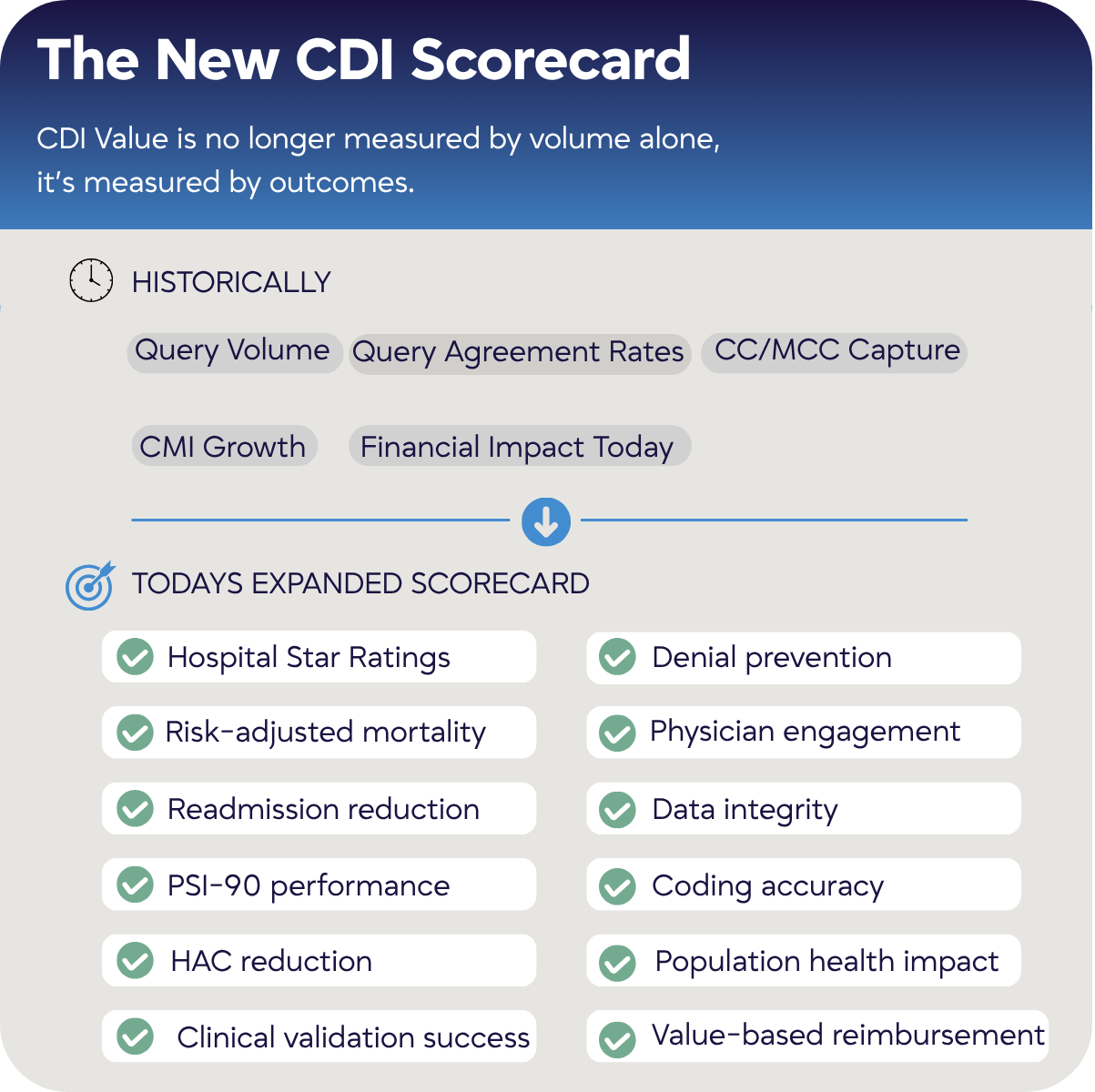
These measures align directly with the outcomes emphasized throughout CMS quality and value-based purchasing programs. [hhs.gov], [dexur.com]
The most important shift is that CDI is no longer measured solely by activity.
It is measured by influence.
The new measure of success is not how many queries were written, but how effectively CDI improves organizational outcomes.
Conclusion
The question is no longer whether CDI professionals should understand CMS quality measures, value-based reimbursement, and organizational performance metrics.
The question is whether healthcare organizations can afford for them not to.
Hospital Star Ratings, mortality measures, readmissions, HACs, PSI-90, value-based purchasing, denials, and compliance risk all begin with the same thing: the clinical story documented in the health record. CMS quality programs tie these outcomes directly to organizational performance and reimbursement. [hhs.gov], [dexur.com]
When that story is incomplete, organizations risk inaccurate quality reporting, missed opportunities for appropriate risk adjustment, increased denials, and weakened value-based performance. AHIMA and ACDIS identify clear, accurate, clinically valid documentation as foundational to quality, coding, reimbursement, compliance, and risk adjustment efforts. [acdis.org], [All CDI Status | Excel]
References
